

Louisiana
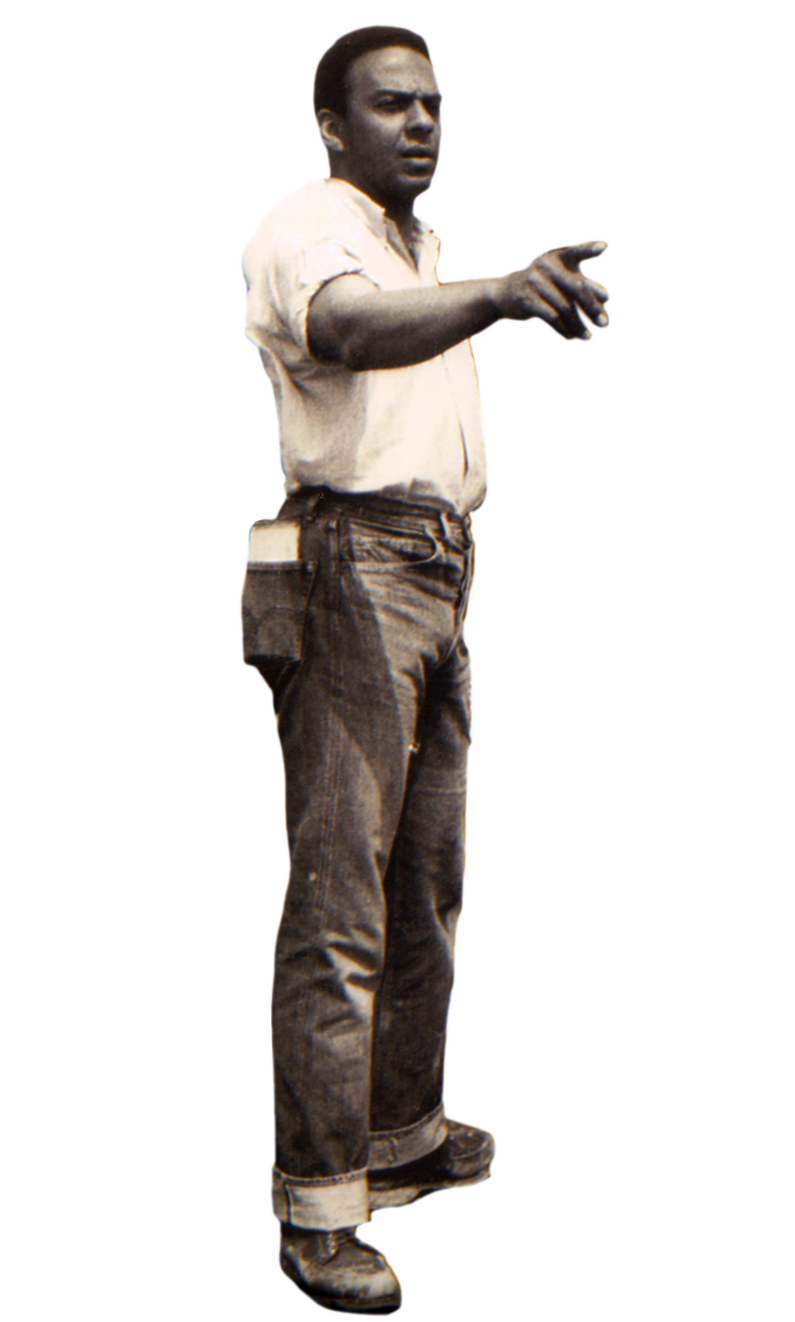
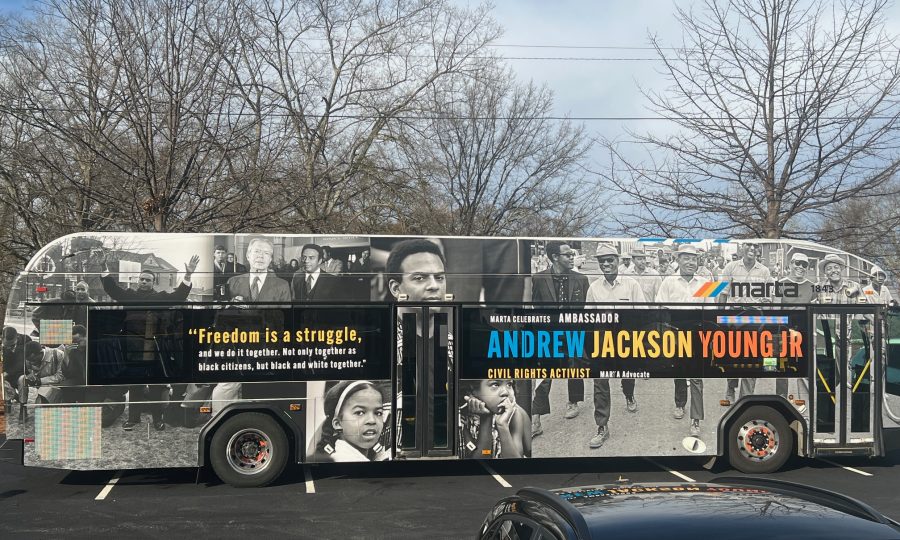
Andrew Young was born on March 12, 1932, in New Orleans.
Alabama
As a member of the Civil Rights movement, Andrew Young served as executive director of the Southern Christian Leadership Council where he became a top strategist and trusted friend to Dr. Martin Luther King Jr., and witnessed his assassination
Atlanta
In 1982, he was first elected Mayor of Atlanta, and served two terms for the city. It was largely because of his international influence that Atlanta was later chosen to host the Centennial Olympic Games in 1996, of which Ambassador Young served as co-chairman.
Washington D.C.
In 1972, a predominately white district in Georgia elected Andrew Young as its representative to the United States Congress, making him the first black man to serve the state in Washington since the Reconstruction era. Andrew Young served in Congress for three terms before being appointed United States Ambassador to the United Nations by President Jimmy Carter in 1977.
Germany
Ambassador Young helped to found and co-chair The Wittenberg Center for Global Ethics, East Germany, to search for an economic reformation.
Senegal
The Andrew J Young Foundation is a supporter of PROMETRA International. The Foundation created a video-documentary on Senegal and the HIV and Ebola research conducted by PROMETRA International and Morehouse School of Medicine, which was completed in 2017.
Liberia
In 2014, Ambassador Young received an urgent call from the President of Liberia, asking for assistance in obtaining a supply of selenium. It was a response to the terrifying outbreak of ebola that soon became a world health concern that year. The Foundation successfully delivered an additional shipment during 2020 in response to the COVID-19 pandemic.
India
The Andrew J Young Foundation provided aid during the COVID-19 pandemic, including sourcing oxygen concentrators.
Korea
In 2017, Soongsil University in Seoul awarded Ambassador Andrew Young a Doctorate in Political Science.
Cote d'Ivoire
Andrew Young has visited and supported the non-profit International University of Grand Bassam (IUGB) towards US Academic Accreditation. In 2020, the University of Georgia, the Andrew Young Foundation, and the International University of Grand-Bassam have also launched an ambitious partnership to build higher-education capacity in West Africa.
Ethiopia
Andrew Young supported the work of two relief entities, Helping Ethiopia Achieve Longevity (HEAL) and Nutrition Plus Holistic Home Care (NPHHC).
South Africa
Andrew Young has been working with UMBAMBANO and FlourishHER to help small business women expand markets and address period poverty.
Haiti
Andrew Young supported My Sister's Place to assist displaced youth get education and learn beneficial career skills.
Rhodesia
In 1979, Young played a leading role in advancing a settlement in Rhodesia with Robert Mugabe and Joshua Nkomo, who had been two of the rebel leaders in the Rhodesian Bush War, which had ended in 1979. The settlement paved the way for Mugabe to take power as Prime Minister of the newly formed Republic of Zimbabwe.
Rwanda
In 2007, GoodWorks Productions released the documentary film Rwanda Rising, about Rwanda's progress since the Rwandan genocide of 1994. Andrew Young served as the film's narrator.
Barbados
In August 1977, Ambassador Young traveled to Barbados, where he held discussions with Prime
Minister Tom Adams. The Ambassador’s engagement with Barbadian leadership focused on
fostering collaboration through the Caribbean Development Bank and supporting democratic
institutions in the Eastern Caribbean. The visit underscored the Carter Administration's
recognition of small Caribbean nations as essential partners in regional stability and economic
development, strengthening ties with nearby island nations that had long felt overlooked by
American foreign policy.
Cameroon
On September 15, 1979, as part of a seven-nation African trade mission, the Ambassador visited
Douala, Cameroon. During this visit, he engaged with Cameroonian business and government
leaders, promoting U.S. trade and investment opportunities. He emphasized the capabilities of
American businesses and the desire to strengthen economic ties between the United States and
African nations. Enthusiastic crowds greeted him, reflecting the positive impact and opinion of
his diplomatic efforts.
Cape Verde
Ambassador Young met with Cape Verde’s President Aristides Pereira on September 5, 1979.
The Ambassador encouraged their Administration to begin formal diplomatic discussions with
Israel, highlighting the potential of Cape Verde to influence other African nations to begin re-
engaging with Israel following its diplomatic isolation resulting from the 1973 Arab-Israeli War.
Costa Rico
In August 1977, during a Caribbean Basin tour, Ambassador Young visited Costa Rica and gave
a major speech upholding the Carter administration’s human rights agenda. He stated that
extreme human suffering could justify U.S. interference in another nation’s sovereignty, a bold
stance that signaled an entirely new moral tone in U.S. foreign policy.
Dominican Republic
As part of his 1977 Caribbean tour, Ambassador Young visited the Dominican Republic to meet
with President Joaquín Balaguer. Their discussions centered on regional development,
democratic reforms, and bilateral cooperation. The visit conveyed the perspective of the Carter
administration’s willingness to maintain strategic partnerships while simultaneously encouraging
improvements in governance and human rights. Ambassador Young’s message emphasized that
U.S. support would align with democratic principles and social progress, marking a shift toward
more values-based diplomacy in U.S.–Caribbean relations.
Gabon
Ambassador Young met with President Omar Bongo in September 1979 as part of his seven-
nation African trade mission, where he discussed U.S.–Gabonese relations, emphasizing
economic cooperation, oil sector investments, and mutual diplomatic support at the United
Nations. This visit helped stabilize relations during Cold War rivalries in Central Africa.
Ghana
Ambassador Young's May 13, 1977 visit to Ghana significantly improved diplomatic relations,
easing tensions from Ghana’s embarrassment over Secretary of State Henry Kissinger's canceled
visit in April 1976. The Ambassador publicly supported the I.K. Acheampong military
government, and suggested that Ghana’s inflation, currency devaluation, and corruption
stemmed primarily from global pressures — such as increased oil prices and declining bauxite
revenues — rather than from domestic mismanagement.
Guyana
During his visit to Guyana in 1977, Ambassador Young engaged with Prime Minister Forbes
Burnham, whose government was pursuing a socialist path. He emphasized the importance of
Guyana's sovereignty and independence in its foreign policy, aiming to strengthen U.S.-Guyana
relations despite ideological differences between the two governments. This engagement
reflected the Carter administration's nuanced approach in advocating for democratic institutions
with countries not aligned with either side in the Cold War.
Haiti
In August 1977, the Ambassador visited Haiti to address the Carter administration's concerns
over human rights abuses under the Duvalier regime. The Ambassador emphasized that U.S.
support hinged on tangible improvements in Haiti's human rights record. He presented Duvalier
with a list of 21 political prisoners, urging their release given the lack of judicial hearings before
their imprisonment. The visit was a rare U.S. pressure campaign on a Caribbean dictator during
the Cold War, showing that the Ambassador and the Carter administration were willing to
challenge even U.S.-friendly regimes in the moral arena of human rights.
Ivory Coast
Ambassador Andrew Young visited Côte d’Ivoire twice during his tenure. First, on October 9,
1978, he met with President Félix Houphouët-Boigny in Abidjan during a West Africa regional
tour. Their two-hour conversation focused on regional security, African decolonization, and the
role of the United States in supporting peaceful solutions to end white minority rule in southern Africa.
They also discussed efforts to limit Soviet and Cuban influence in Africa and encourage
stronger engagement from Western nations. This visit reflected the Carter Administration’s
broader diplomatic re-engagement with African leadership.
A year later, on September 13–14, 1979, Ambassador Young returned as part of a seven-nation
trade and diplomacy mission across Africa. This time, he led a 44-member delegation of U.S.
business leaders to promote economic cooperation and address trade imbalances. In Ivory
Coast’s case, the country’s exports to the U.S. far exceeded its imports. The Ambassador
encouraged greater U.S. investment in Ivorian development to foster a more balanced economic
partnership.
Years after his ambassadorship, in 2014, Ambassador Young was awarded Côte d’Ivoire’s
highest civilian honor, the Commandeur de L’Ordre National. The recognition honored his
contributions to the country’s higher education system, particularly his role in helping establish
the International University of Grand-Bassam.
Jamaica
In August 1977, Ambassador Young visited Jamaica as part of his Caribbean Basin tour. During
this visit, he engaged in high-level dialogue with Prime Minister Michael Manley, a leading
voice in the Non-Aligned Movement (a coalition of developing countries not formally aligned
with any major power bloc). Their meeting aimed to reduce tensions between the United States
and Jamaica, which had grown skeptical of prior U.S. foreign policy toward the region.
The Ambassador’s presence marked a turning point and built trust as he emphasized the Carter
administration’s commitment to economic cooperation, mutual respect, and development-based
diplomacy.
Kenya
During his February 1977 Africa tour, Ambassador Young stopped in Kenya to meet with
President Jomo Kenyatta.
Their discussions focused on diplomatic efforts to resolve the Rhodesian crisis, referring to the
U.S.–UK-led diplomatic efforts to end white-minority rule in
Rhodesia after its Unilateral Declaration of Independence (UDI), and the Ambassador
encouraged Kenya’s support for a peaceful transition to majority rule. This meeting reinforced
U.S. interest in consulting closely with Frontline States (a coalition of southern African nations
committed to ending apartheid in South Africa and minority white rule in Rhodesia.)
Liberia
Ambassador Young visited Liberia twice during his tenure as U.S. Ambassador to the United
Nations. His first visit occurred in May 1977 as part of his initial African tour. In capital city
Monrovia, he met with President William R. Tolbert Jr., assuring him that the United States,
under President Carter, would remain a committed partner in African development. This
engagement helped reinforce U.S. credibility across the continent and affirm the Carter
administration’s emphasis on human rights and partnership.
The Ambassador returned to Liberia in September 1979 during a seven-nation U.S. trade mission
(distinct from his 1978 trade tour that included Ivory Coast), where Monrovia was again the first
stop. At that time, President Tolbert was serving as Chairman of the Organization of African
Unity (O.A.U.). They held high-level discussions on rekindling African diplomatic relations with
Israel, which had been severed by most African states due to the 1973 Arab-Israeli War. The
Ambassador encouraged Tolbert to champion this dialogue among African leaders, emphasizing
an “African urgency” in addressing the Middle East conflict. He argued that renewed
African–Israeli engagement could promote peace while delivering political and economic
benefits. The Ambassador also promoted mutual investment and sought to improve perceptions
of U.S. business practices on the continent.
His visit further solidified Liberia’s role as a pro-
Western ally and earned him Liberia’s highest civilian honor, the Knight Commander of the
Humane Order of African Redemption.
Malta
From January 30 to February 1, 1978, Ambassador Young traveled to Valletta, Malta to
participate in historic negotiations with Patriotic Front leaders Robert Mugabe and Joshua
Nkomo. Joined by British officials including David Owen, the meetings were a crucial step in
advancing the Anglo-American plan for Rhodesia’s transition to majority rule. The talks focused
on building consensus among nationalist factions and reaffirming international support for free
elections and peaceful decolonization. The visit reflected not only the Carter administration’s
active role in mediating African liberation struggles but also underscored the importance of
diplomatic engagement with even small nations.
Mexico
On August 7–8, 1977, Ambassador Young visited Mexico City for bilateral discussions with
Presidente José López Portillo. This two-day stop underscored Mexico’s strategic importance in
U.S. regional diplomacy. The Ambassador’s meetings focused on strengthening U.S.–Mexico
cooperation on trade, migration, and support for Caribbean and Central American stability. The
Ambassador’s visit reaffirmed the Carter administration’s efforts to treat Mexico as a full partner
in regional affairs, moving away from the one-sided policies of the past. His outreach reflected
the administration’s broader goal of building consensus across the Western Hemisphere through
respectful engagement.
Morocco
On July 21, 1977, Ambassador Young visited Rabat, Morocco, for high-level meetings with
King Hassan II and senior Moroccan officials. The discussions focused on regional diplomacy,
including the Western Sahara conflict and Arab–Israeli relations. The visit strengthened ties with
the relatively politically-moderate nation and reflected the Carter administration’s growing
emphasis on balanced engagement in North Africa.
Mozambique
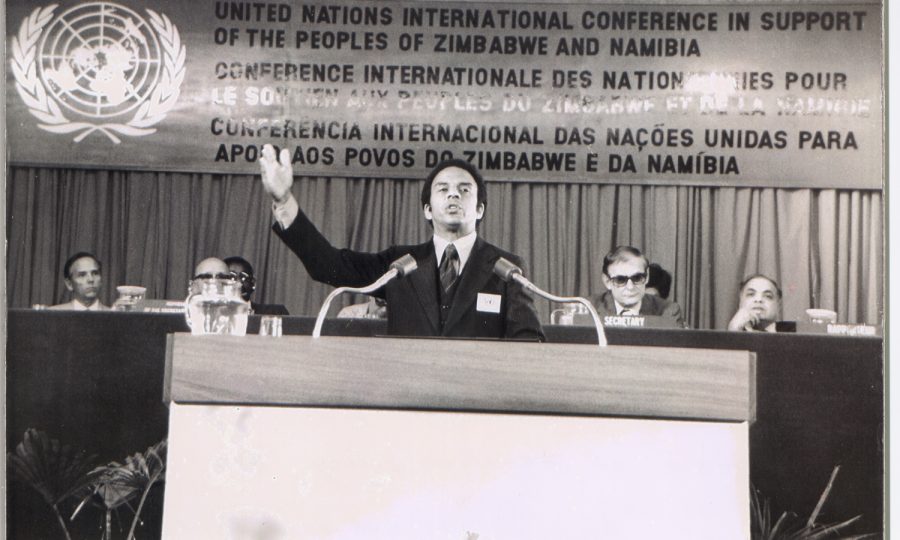
On May 16 of 1977, in Maputo, Mozambique’s capital, Ambassador Young attended a United
Nations-sponsored conference focused on supporting liberation efforts in Rhodesia and other
Southern African nations as they sought independence from entrenched white-minority regimes.
During this visit, the Ambassador delivered a speech where he emphasized the Carter
administration’s commitment to peaceful change in Southern Africa through economic
incentives and negotiation, rather than confrontation with entrenched authoritarian governments.
Namibia
Although Ambassador Young did not visit Namibia during his ambassadorship, he played a
pivotal role in advancing its independence. He coordinated with key African leaders and
consistently elevated the issue at the United Nations. As a member of the Western ‘Contact
Group,’ he supported and helped draft U.N. Security Council Resolution 435. He also helped
maintain pressure on South Africa to allow free elections in Namibia under international
supervision. His earlier Lusaka meetings with regional figures, including SWAPO (South West
Africa People's Organization) leader Sam Nujoma, reinforced this diplomatic strategy.
Nigeria
In Nigeria, the Ambassador represented the U.S. at FESTAC ’77, the second World Black and
African Festival of Arts and Culture. He met with Nigerian Head of State Olusegun Obasanjo,
with whom he established a new era of friendly and cooperative Nigerian-American relations
after a long period of suspicion and tension. Following the meeting, the Ambassador had
successfully persuaded Nigeria—the most influential country in black Africa at that time —to
publicly endorse significant U.S. involvement in efforts to achieve peace and majority rule in
southern Africa. The meeting laid the groundwork for future collaboration and was an early
example of the newly evolving diplomatic strategy under the Carter administration.
Panama
On June 16–17, 1978, Ambassador Young accompanied President Carter to Panama City for the
official signing ceremony of the Panama Canal Treaties. As a member of the U.S. delegation, he
participated in meetings with Latin American leaders and joined President Carter and Secretary
of State Cyrus Vance in reaffirming U.S. commitment to equitable international partnerships. His
inclusion in the delegation highlighted the Ambassador’s broader role in shaping the Carter
administration’s foreign policy agenda beyond the United Nations, particularly in support of
regional diplomacy and post-colonial sovereignty.
Philippines
In May 1979, arriving on May 10th, Ambassador Young led the U.S. delegation at the United
Nations Conference on Trade and Development (UNCTAD) in Manila. He emphasized that
global development is a shared responsibility among all nations. His participation underscored
the U.S's commitment to addressing global economic disparities and strengthening alliances in
Southeast Asia amid Cold War tensions. During his visit, Ambassador Young met with then-
President Ferdinand Marcos and Foreign Minister Carlos P. Romulo, discussing bilateral
relations and regional security issues. These engagements highlighted the strategic importance of
U.S.-Philippine relations.
Senegal
Between September 19-21 of 1979, Ambassador Young visited Dakar where he engaged in
diplomatic meetings with President Léopold Sédar Senghor and Prime Minister Abdou Diouf,
encouraging economic liberalization and Africa–Israel dialogue. His visit celebrated Senegal’s
role as a moderate, stabilizing force in West Africa and a key partner in regional peace efforts.
The Ambassador's advocacy for African decolonization and human rights aligned with Senegal's
pre-existing commitment to these principles.
South Africa
On May 21–22, 1977, Ambassador Young visited South Africa. The visit, arranged at the
invitation of mining magnate Harry Oppenheimer, included meetings with Soweto student
leaders, community activists, journalists, and influential business figures. At a public business
dinner, Ambassador Young emphasized that economic pressure could bring about radical
changes in South Africa, foreshadowing his later advocacy for U.N. sanctions against the
apartheid regime. Although he did not meet Nelson Mandela, who was still imprisoned at the
time, the Ambassador’s presence in South Africa symbolized growing U.S. engagement with
anti-apartheid voices and contributed to a shift in American foreign policy toward greater
opposition to racial injustice. His visit laid the groundwork for his successful push for U.N.
Security Council Resolution 418, which imposed a mandatory arms embargo on South
Africa—the first such measure in U.N. history.
(On May 15, 1977, Ambassador Young briefly had stopped in Lisbon, Portugal to coordinate
with Vice President Walter Mondale before the negotiations with South Africa. While not a
formal diplomatic visit, he briefed the Vice President before his meeting with South African
Prime Minister John Vorster.)
Sudan
In May 1977, the Ambassador visited Sudan, engaging in high-level discussions with President
Jaafar Nimeiry. This visit occurred shortly after Sudan expelled 70 Soviet military advisors
following suspicions of Soviet interference in Sudanese internal politics and a pro-Western pivot
by President Nimeiry. President Nimeiry emphasized the need for U.S. military assistance to
replace Soviet support. The Ambassador's visit underscored the United States' commitment to
supporting Sudan's sovereignty and regional stability as well as broader geopolitical concerns --
including the influence of neighboring countries and the implications of shifting Cold War
alliances in the Horn of Africa.
Suriname
Ambassador Young visited Suriname in August 1977 during his Caribbean Basin tour. While in
Paramaribo, he met with Surinamese leaders to discuss post-independence development and U.S.
support for economic growth. The visit came at a time when Suriname was seeking to establish
its identity on the world stage following its 1975 independence from the Netherlands.
Ambassador Young’s outreach emphasized U.S. willingness to engage with emerging
democracies and offer technical assistance. His efforts helped foster early diplomatic ties and
reflected the Carter administration’s broader support for self-determination and U.S.-South
American cooperation.
Switzerland
In July 1978, Ambassador Young traveled to Geneva for U.N. human rights meetings, where his
remarks comparing political prisoners in the U.S. and the Soviet Union drew controversy. The
visit was conducted under the auspices of the United Nations and did not involve bilateral
diplomacy with Switzerland itself. Although controversial, the comments highlighted the
challenges of principled diplomacy in a Cold War context and underscored his commitment to
applying a consistent moral standard in U.S. foreign policy, particularly in support of African
liberation.
Tanzania
In Tanzania, the Ambassador represented the United States at the nation’s political milestone
celebrations, the 20th anniversary of Zanzibar’s ruling party and the 10th anniversary of the
Arusha Declaration, emphasizing support for majority rule. In addition, he met with President
Julius Nyerere to discuss the United States’ decision not to send arms to Somalia during its
conflict with Ethiopia over the Ogaden region, Nyerere would then praise U.S. restraint as
instrumental in facilitating a peaceful resolution. By the conclusion of meetings, the Ambassador
secured Tanzania’s cooperation in promoting independence movements in Southern Africa.
Ambassador Young returned to Tanzania in early December 1978, to provide a press briefing on
the status of Namibia’s struggle for independence. His remarks reflected growing international
consensus around U.N. Security Council Resolution 435 and reaffirmed the Carter
administration’s support for a peaceful, multilateral resolution to end South African occupation.
This follow-up visit deepened ties with President Julius Nyerere and reinforced Tanzania’s role
as a key partner in African decolonization and diplomacy.
Trinidad & Tobago
During his August 1977 tour, Ambassador Young visited Trinidad and Tobago to meet with
Prime Minister Eric Williams. Recognizing it as one of the most industrialized and economically
influential nations in the Caribbean, Ambassador Young focused on enhancing energy
cooperation, economic ties, and regional development. The discussions also reinforced mutual
interests in promoting democratic values and strengthening multilateral institutions across the
board. His engagement contributed to a more coordinated approach to Caribbean diplomacy and
demonstrated U.S. respect for Trinidad’s leadership in the region., he met with President
Julius Nyerere to discuss the United States’ decision not to send arms to Somalia during its
conflict with Ethiopia over the Ogaden region, Nyerere would then praise U.S. restraint as
instrumental in facilitating a peaceful resolution. By the conclusion of meetings, the Ambassador
secured Tanzania’s cooperation in promoting independence movements in Southern Africa.
Ambassador Young returned to Tanzania in early December 1978, to provide a press briefing on
the status of Namibia’s struggle for independence. His remarks reflected growing international
consensus around U.N. Security Council Resolution 435 and reaffirmed the Carter
administration’s support for a peaceful, multilateral resolution to end South African occupation.
This follow-up visit deepened ties with President Julius Nyerere and reinforced Tanzania’s role
as a key partner in African decolonization and diplomacy.
United Kingdom
Ambassador Young made multiple visits to the United Kingdom during his tenure, with key trips
in May and November 1977. These visits were central to the development of the Anglo-
American proposal for Rhodesia’s peaceful transition to majority rule. In London, he held
extensive talks with British Foreign Secretary David Owen to coordinate diplomatic strategy and
prepare for negotiations with African leaders. The meetings laid the groundwork for what would
become a cornerstone of the Carter administration’s Africa policy and demonstrated the
importance of transatlantic alignment in advancing decolonization efforts through peaceful and
multilateral means.
Venezuela
In August 1977, Ambassador Young traveled to Caracas for meetings with President Carlos
Andrés Pérez. As a major oil producer and influential voice in Latin America, Venezuela played
a central role in hemispheric affairs. Ambassador Young’s discussions with President Pérez
focused on OPEC policies, regional stability, and support for the Panama Canal treaties. His visit
signaled a renewed U.S. effort to engage Latin America on equal terms and rebuild trust with
nations that had grown wary of American interventionism. He succeeded in strengthening ties
and advanced the Administration’s agenda of cooperative, human rights–centered diplomacy.
Zaire
On July 19, 1977, Ambassador Young arrived in Kinshasa, Zaire (now the Democratic Republic
of the Congo), where he met with President Mobutu Sese Seko. The visit came at a time of
heightened Cold War competition in Central Africa. Discussions centered on the Rhodesian
crisis, regional development, and the threat of Soviet and Cuban influence in southern Africa.
The Ambassador reaffirmed U.S. support for decolonization through peaceful transition while
maintaining close relations with pro-Western African leaders. The visit reinforced Zaire’s role as
a pivotal partner in America’s Africa strategy.
Zambia
Ambassador Young traveled to Zambia multiple times during his tenure. His first visit occurred
in May–June 1977 as part of his major African tour, where he held initial discussions with
President Kenneth Kaunda on the need for international support for a post-Rhodesian settlement.
He returned in September 1977 with British Foreign Secretary David Owen to formally present
the Anglo–American plan to Frontline States. These early visits positioned Zambia as a pivotal
venue for multilateral diplomacy and underscored the Ambassador’s sustained engagement with
regional leaders to promote peaceful change in Southern Africa.
In July 1978, the Ambassador returned to Lusaka for eight hours of high-level negotiations with
Foreign Secretary Owen, regional African leaders, and Rhodesian nationalist figures to discuss
Rhodesia’s peaceful transition to majority rule (and the name change to Zimbabwe). He also met
privately with President Kaunda to build continued support for the plan. The visit marked a
turning point in U.S. diplomacy, further solidifying Zambia’s central role in African
decolonization.
Zimbabwe (formerly Rhodesia)
Between 1977 and 1978, Ambassador Young led key diplomatic efforts to end British
colonial/white-minority rule in then-Rhodesia (now Zimbabwe). He helped advance a joint U.S.-
British settlement plan to expedite Rhodesia’s decolonization. He also met with liberation figures
including Joshua Nkomo and Sam Nujoma and helped preserve unity among the nationalist
movements. And as discussed above, during this period, the Ambassador worked closely with
leaders of Mozambique and Zambia to build regional consensus for the transition.